

Fashion Expo Freight: Netherlands to Shenzhen, Venue Setup
Business background
A high-end Dutch fashion brand was invited to take part in the Shenzhen International Fashion Show. It needed to ship couture garments, runway look exhibits, booths, display racks, soft furnishing props, and other exhibition materials from Amsterdam in the Netherlands to the Shenzhen Convention and Exhibition Center as one shipment. After the show, some sample garments would stay in China for the brand's offline order shows, and the rest would return to its European headquarters.
The shipment consists mainly of couture gowns and handmade garments, with fabrics mostly silk, tulle, and embroidered and beaded materials that snag, crease, and absorb moisture easily. Accessories include handmade jewelry, hats, and shoes, all delicate and fragile. Booth props are bulky and irregularly shaped, so they need separate protection from the garments and careful load planning. The client had only shipped small sample batches by express before. This was its first cross-border exhibition logistics operation with door-to-door service and direct delivery to the venue. Its main concerns were preventing fabric creases and moisture damage, matching the show schedule, and complying with import and export declaration rules.
After comparing multiple proposals, the client chose Shipping Whale International Logistics for the full process: one-stop door-to-door exhibit logistics covering pickup in the Netherlands, temperature-controlled moisture-proof packing, export customs declaration, international ocean freight, Shenzhen import customs clearance, and delivery and placement at the venue.
Operational flow
The shipment totals one 40-foot high cube container (40HQ). It contains 117 couture garments (embroidered gowns, silk tulle series, and handmade ensembles) and 42 runway accessories (hats, jewelry, and custom shoes); the largest single display rack measures 2.4m×1.1m×2.2m; there are 5 detachable runway platforms, 12 mannequins, and about 2.5 cubic meters of brochures and soft furnishing materials.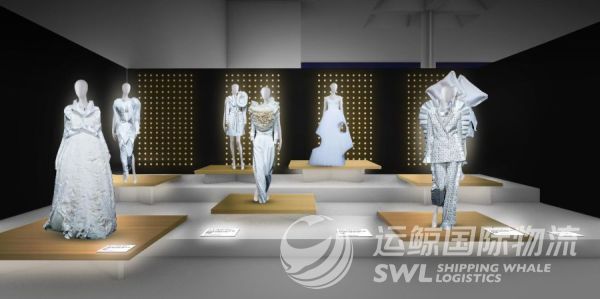
Because high-end fashion exhibits are delicate, prone to creasing and moisture damage, and tied to fixed show dates, we customized a dedicated exhibition logistics plan: Pickup in the Netherlands → hanging packing for garments + custom protection for props → container loading, isolation, and securing at the warehouse → Dutch export customs declaration → ocean freight to Shenzhen Yantian Port → import customs clearance in China → container drayage directly to the venue, unpacking, and placement for booth setup
The execution steps are as follows:
1. Exhibition team coordination, with the sailing schedule planned back from the setup deadline
We set up a dedicated operations team for the fashion show and checked the exhibit list with the brand item by item in advance: style numbers, quantities, fabric materials, value per item, and special accessory notes. We also confirmed the venue address, booth setup deadline, venue unloading rules, and the post-show exhibit routing plan (sample garments kept in China for order shows / return to Europe).
2. Door-to-door pickup and category-specific protective packing
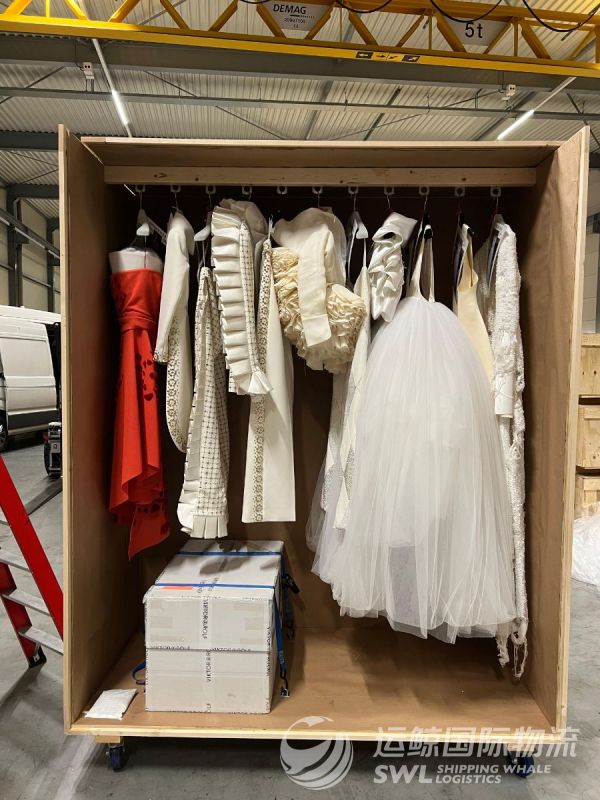
High-end garments are not folded. They travel by hanging transport in garment cases, the key focus of this packing job. The operations team packed on site at pickup:
- Garments: secure hangers to the hanging rail, leave clearance below gown hems to prevent pressure creases;
- Jewelry, handmade hats, and shoes: pack separately in shockproof gift boxes lined with EPE foam, number each item, and store them in a separate zone from garments;
- Booths, mannequins, and metal racks: use EVA corner protectors on edges and corners and surface film to prevent scratches; we fit large irregular pieces with reinforced wooden frames and fumigate wood packaging to IPPC standards as required for entry into China. We put humidity indicator cards and desiccants inside every package and control moisture throughout transit so silk fabrics do not absorb damp and change color.
3. Warehouse container loading by zone, with isolation and securing
Once the cargo reached the Dutch warehouse, the team loaded the container by zone: garment cases were grouped and secured on one side of the container, with straps locking the cases in place to stop movement. Rigid display fixtures and booth materials went on the other side, separated by air bags and wooden blocking so hard props would not knock against the garment cases. Every exhibit and every pack had a matching number. The team took photos and video throughout loading for the record.
4. Dutch export customs declaration and document preparation
- Declare exhibits by intended use: sample garments sold on site after the show or kept in China are declared under general trade; for exhibits planned for later re-export, prepare an ATA Carnet as a backup option at the same time;
- Compile the full document set: commercial invoice, packing list, brand exhibit description, and certificate of origin;
- Apply IPPC fumigation marks to all wood packaging and match documents with packaging details one to one to make inspection at the Chinese port easier.
5. End-to-end ocean freight tracking
After departure, we shared the B/L, vessel name and voyage, and container number with the client, along with daily vessel updates and ETA. We also sent documents to the China customs clearance team in advance and coordinated with the venue booking channel.
6. Shenzhen import pre-clearance
We started pre-clearance review five working days before the cargo arrived at port, submitted exhibit documents and brand filing information in advance, and checked HS codes and declaration elements. For high-end branded apparel, we completed price pre-review early to reduce inspection risk and shorten port dwell time.
7. Container drayage directly to the venue, unpacking handover, and setup support
We arranged container pickup right after customs release and applied to the venue in advance for an unloading slot and truck access permit. The delivery truck had a tail lift and arrived at the venue unloading area on time. On arrival, the team checked each item against the list by number, opened the cases to check garments for creases and accessories for damage, and completed an on-site handover and sign-off with the brand's setup team. We also arranged to collect and store the empty container, reserve it for the post-show return shipment, and avoid detention charges.
Cross-border transport notes for high-end apparel trade shows
1. Lock the schedule first and work back from the setup deadline to book sailings
Fashion show dates are fixed, and runway rehearsals cannot move, so leave ample buffer. Space gets tight in peak season. Book space 3 to 4 weeks ahead, choose reliable sailings, and allow buffer for customs clearance and inspection.
2. Hang garments in transit where possible, and make anti-crease, moisture-proof packing the priority
Fold silk, embroidered, and tulle gowns as little as possible. Use professional garment cases. Never let ordinary plastic bags touch the fabric directly; use acid-free paper and dust-proof cotton instead. Put humidity monitors in the container. During ocean transit, control moisture and salt-spray damage to fabrics. Keep photo and video records of packing and loading for future claims.
3. Plan exhibit routing early and choose the right declaration method
After the show, two routes apply: goods kept in China for sale or order shows are declared under general trade; goods returned to Europe unchanged after the show should use an ATA Carnet where possible to simplify import and export formalities. Pack exhibits for different routes separately and list them on separate inventories to avoid customs confusion.
4. Learn the venue's unloading rules in advance
Most convention centers in China require advance booking for delivery slots and impose truck restrictions and unloading time windows. Before garment cases and high-cube containers enter the venue, confirm passage height and elevator load capacity so the cargo does not reach the gate and fail to get in. You can apply to store empty containers in a designated venue area, label them clearly, and make post-show repacking for the return trip easier.